Tahin-Pekmez: Turkey's Old Sweet Breakfast Pairing
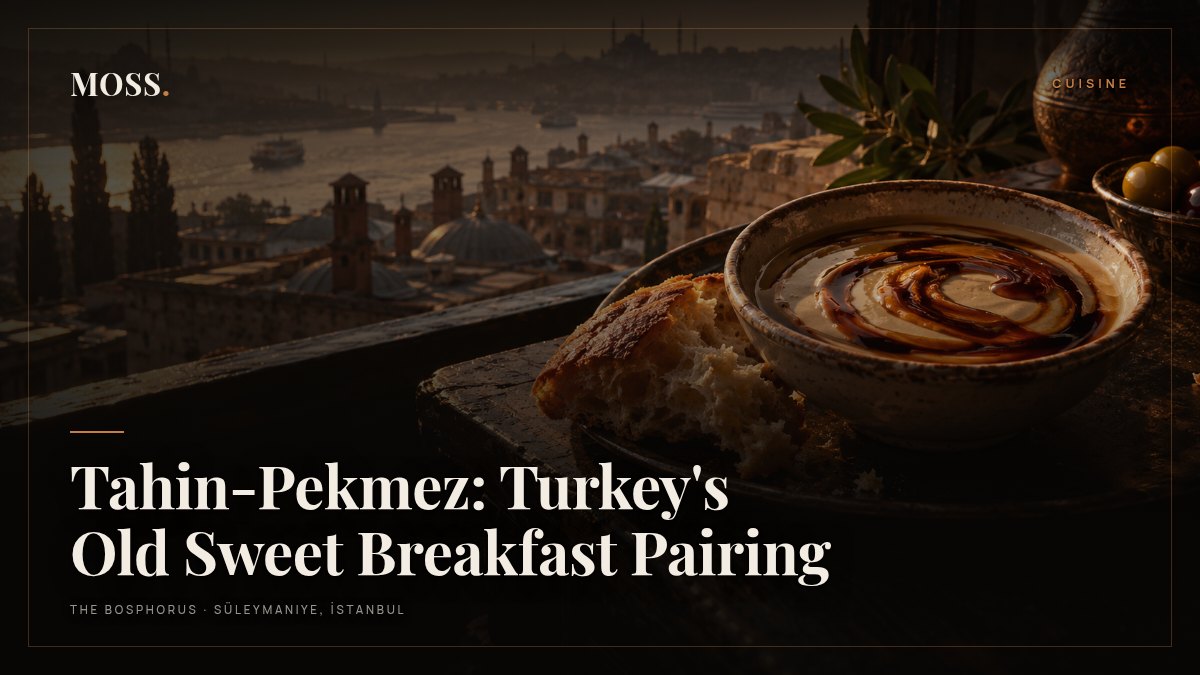
Tahin-pekmez is one of the oldest sweet pairings on the Turkish breakfast table: tahin (tahini, a paste of ground sesame) stirred together with pekmez (a thick molasses made by boiling down grape juice, or sometimes carob or mulberry) and eaten with bread. The two are mixed in a small bowl until they turn into a glossy, caramel-coloured spread that is nutty, sweet and slightly bitter at once. It is a winter food, long associated with Anatolian villages, and it still appears on many Turkish breakfast tables when the weather turns cold.
What are tahini and pekmez?
Tahin is made by roasting sesame seeds and grinding them to a smooth, pourable paste. Turkish tahin is usually made from well-roasted seeds, which gives it a deeper, toastier taste than many of the pale tahinis sold abroad. The oil separates and rises to the top of the jar over time, so it needs a stir before use. On its own it is rich and faintly bitter, not sweet at all.
Pekmez is the sweet half. Grape pekmez, the most common, is made in late summer and autumn, when fresh grape juice is boiled slowly in wide pans until it reduces to a dark syrup. Traditionally no sugar is added; the sweetness comes from the fruit. Other versions follow the same idea with different fruit:
- Üzüm pekmezi (grape molasses): the classic, dark and fruity, made across the grape-growing regions of Anatolia.
- Keçiboynuzu pekmezi (carob molasses): from the Mediterranean coast, darker and earthier, with a cocoa-like note.
- Dut pekmezi (mulberry molasses): lighter and more floral, a speciality of some eastern provinces.
Some pekmez is runny, and some is beaten until it thickens into a pale, almost solid paste sold in tubs. Either works at breakfast.
How do you mix tahin and pekmez?
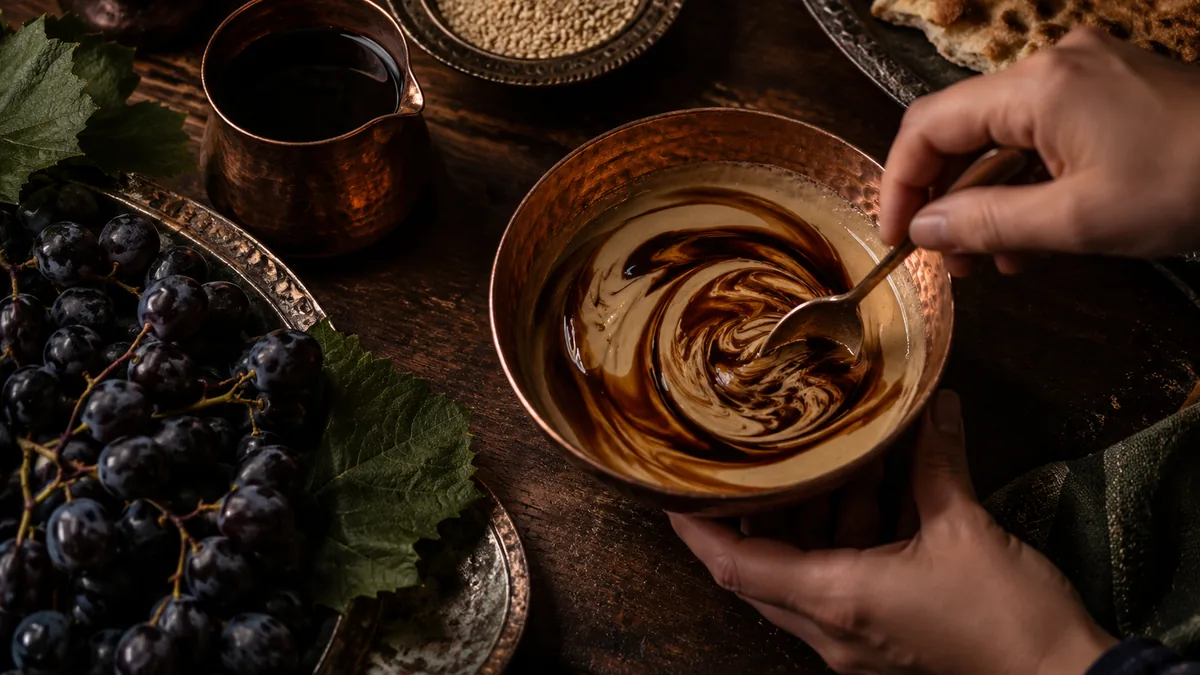
There is no fixed recipe, only family habit. Most people pour some tahin into a small bowl, add pekmez on top, and stir with a spoon until the two come together. As they mix, the texture changes: the loose tahin and the runny molasses tighten into a thick, spreadable paste, lighter in colour than the pekmez on its own.
Ratios are personal. Many people like roughly equal parts, others go heavier on tahin for a nuttier, less sweet result, and children tend to ask for more pekmez. Some tables serve the two separately, side by side in a divided dish, so each person can mix their own on the plate. A few tips:
- Stir the tahin in its jar first, so the oil is worked back in before you pour.
- Keep stirring a little longer than seems necessary. The paste thickens and turns glossy once it is fully combined.
- Taste and adjust. If it is too sweet, add tahin; if it feels heavy, loosen it with a little more pekmez.
Why is tahin-pekmez a winter breakfast?
In much of Anatolia, winters are long and cold, and the village diet was built around foods that kept. Grape molasses was made in autumn, when the harvest came in, and stored in jars to last until spring. Tahin keeps well too. Together they gave families a dense, sweet, filling food for cold mornings, long before sugar was cheap or easy to come by.
That reputation has stuck. Many Turks still think of tahin-pekmez as a warming food, the sort of thing a grandmother puts in front of a child before school on a snowy day. Pekmez is also traditionally valued as a source of iron, and in many homes a spoonful on its own is part of the winter routine. You will find the pairing on breakfast tables all year, but it feels most at home between November and March.
How do you eat tahin-pekmez with bread?
Tahin-pekmez is eaten by dipping or spreading, with bread doing the work. Tear a piece of crusty white bread or a slice of village loaf, drag it through the bowl and eat it in one bite. Some people spread it thickly on toast; others prefer it on a warm simit, where the sesame on the crust echoes the tahin in the bowl.
Within the larger breakfast it sits on the sweet side of the table, next to the jams and the honey and kaymak. It is richer than any of them, so a little goes a long way. A good rhythm is salty first (cheese, olives, eggs), then a bite or two of tahin-pekmez late in the meal, with a fresh glass of çay (Turkish black tea) to cut through the sweetness.
Tahin-pekmez beyond breakfast
The pairing turns up outside the morning too. In some homes it is a quick afternoon snack for children, spread on bread straight from the kitchen counter. Tahin and pekmez both go into baking, for sweet rolls and pastries, and pekmez is stirred into some old winter desserts. In cafés around the country you may see tahin drizzled over sweets, or pekmez offered as a spoonful of something old-fashioned. Wherever it shows up, it carries the same feeling: plain ingredients, made in season, meant to last.
A slow winter breakfast in Süleymaniye
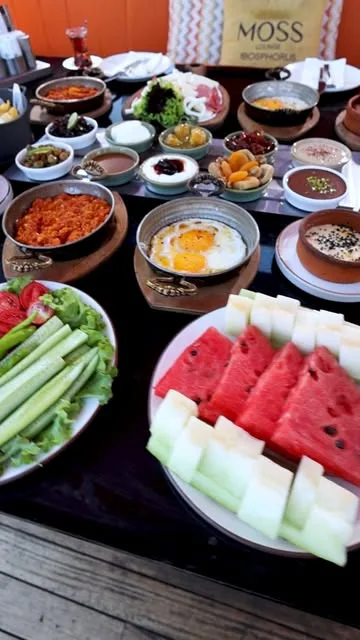
Tahin-pekmez belongs to the long, generous kind of breakfast that Istanbul still keeps for weekends and cold mornings. At Moss Lounge the Bosphorus, on a rooftop terrace in Süleymaniye, the serpme breakfast covers the table with more than 40 small dishes, and the çay keeps coming. Adem Özen, Moss Adem to his regulars, treats the place as a home rather than a restaurant, which suits a breakfast meant to stretch out. The terrace looks over the Süleymaniye Mosque and down to the Golden Horn and the Bosphorus. Reservations are by WhatsApp, from 08:00.