Sunset Over the Golden Horn: Istanbul's Magic Hour
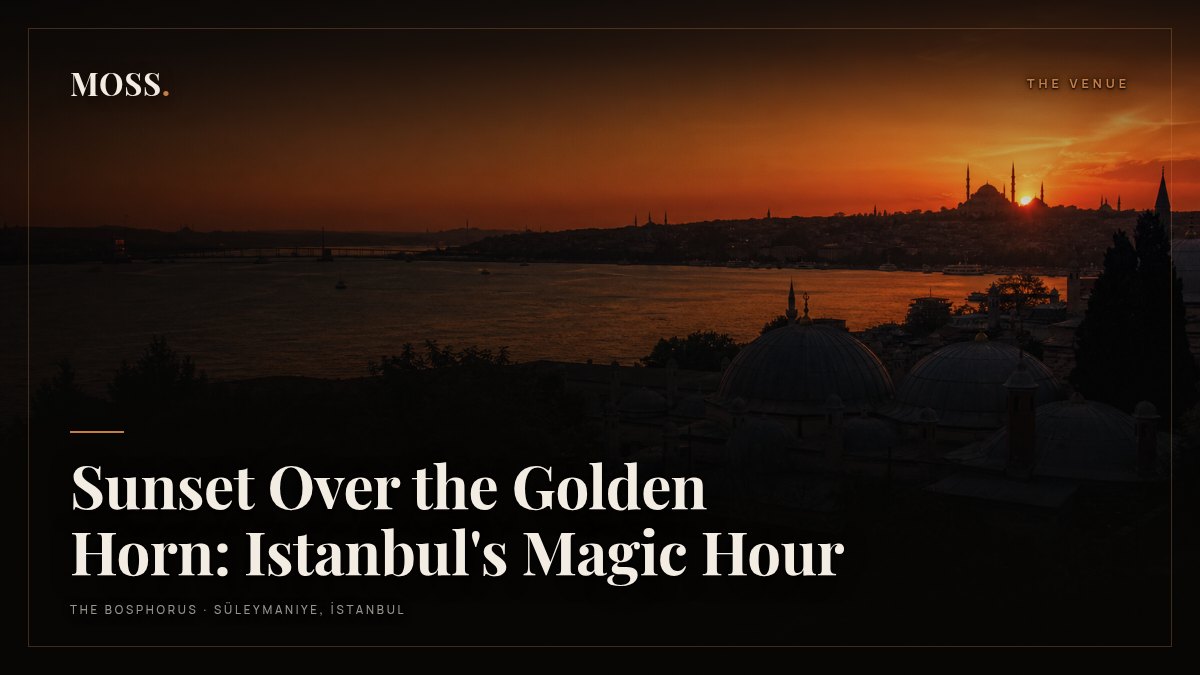
Sunset over the Golden Horn is Istanbul's magic hour, the stretch of evening when the low sun turns the Haliç (the Golden Horn, the curved inlet that splits the European side) and the old city to warm gold. People ask where and when to catch it, and the short answer is from height on the historic peninsula, in the half hour before the sun drops behind the hills across the water. The name is not decoration. For a few minutes the light genuinely gilds the domes, the minarets, and the surface of the inlet, and then it shifts again into dusk.
Why is it called the Golden Horn?
The Haliç is a long, curved inlet of water that branches off the Bosphorus and reaches into the European side of the city, separating the historic peninsula from the districts to the north. Its shape, a slender curving horn, gave it half its name. The gold is the other half.
At the right hour the low sun strikes the water and the stone of the old city and turns both warm and luminous, and the inlet looks as though it has been gilded. The colour is most obvious in the last light before sunset, when everything the sun touches takes on that warm cast. It is an old name for an old effect, and on a clear evening you see exactly why it stuck.
How does the light move at sunset?
The magic hour is not a single moment but a sequence, and watching it from start to finish is the real pleasure. If you know what is coming, you know when to look.
- Late afternoon. The light lengthens and warms. The harsh midday flatness goes, and the old city begins to glow rather than just sit there.
- Golden hour. The sun drops low and the gold arrives. The domes and minarets catch it, the water holds it, and the whole skyline warms at once. This is the frame the name promises.
- Sunset. The sun slips behind the hills across the Horn and the sky behind the skyline colours, often deep orange into pink.
- Blue hour. The colour fades to a soft blue and the city lights begin to come up on the darkening water. The view does not end; it turns into evening.
Where are the best vantage points for the sunset?
You want height and a clear line west, toward the water and the hills the sun sets behind. The historic peninsula gives you both, and a rooftop or terrace there is the difference between glimpsing the sunset and watching it.
From a rooftop in Süleymaniye or Fatih you look out over the Horn with the old city in the foreground, so the gold lands on the domes and minarets in front of you and on the water beyond. The shoreline gives you the water at eye level, which is fine, but the peninsula's height gives you the layered view: foreground stone, the inlet, and the sky behind. As the light goes, the call to prayer often carries across the rooftops, which adds something a photograph cannot hold. For more on the neighbourhood the view rises from, it is worth reading the guide to Süleymaniye, and for the wider set of viewpoints, where to find the best Bosphorus views.
When should you arrive?
Earlier than you think. The single most common mistake is turning up as the sun is already setting, finding a seat, and missing the warm build-up that is half the pleasure.
Arrive while the afternoon light is still high and give yourself time to settle with a glass of çay (Turkish tea) before the gold begins. That way you watch the whole sequence rather than catching the last few minutes of it. The magic hour moves quickly once it starts, so a table you are already sitting at beats a viewpoint you are still hunting for. Staying on past sunset is its own reward, since blue hour and the lit city are quieter and, to some eyes, lovelier than the gold itself.
The magic hour from a Süleymaniye terrace
If you would like to watch it unfold from a table rather than a railing, Moss Lounge the Bosphorus sits on a rooftop terrace in Süleymaniye, where the old city meets the water, with the Süleymaniye Mosque on one side and the Golden Horn and Bosphorus on the other. Adem Özen, the host, keeps the place warm and unhurried, so you can arrive in the afternoon light, watch the sunset gild the Horn, and stay on while the city lights come up on the water.