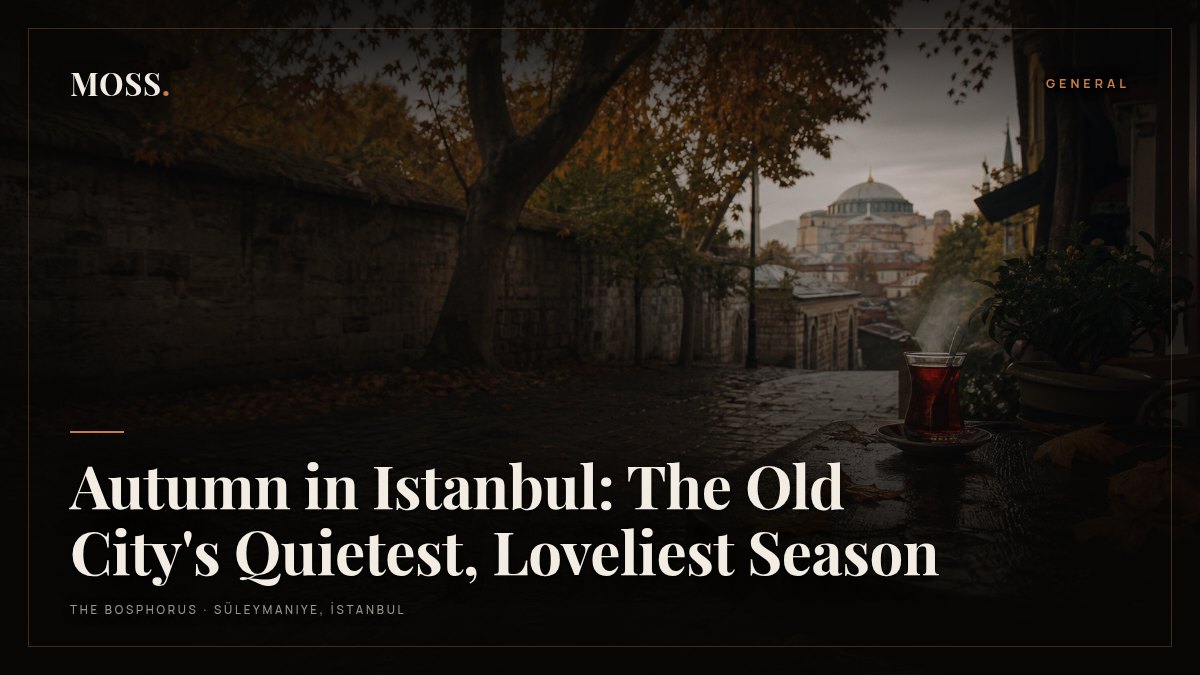
Istanbul in Winter: Why the Old City Is Worth the Cold
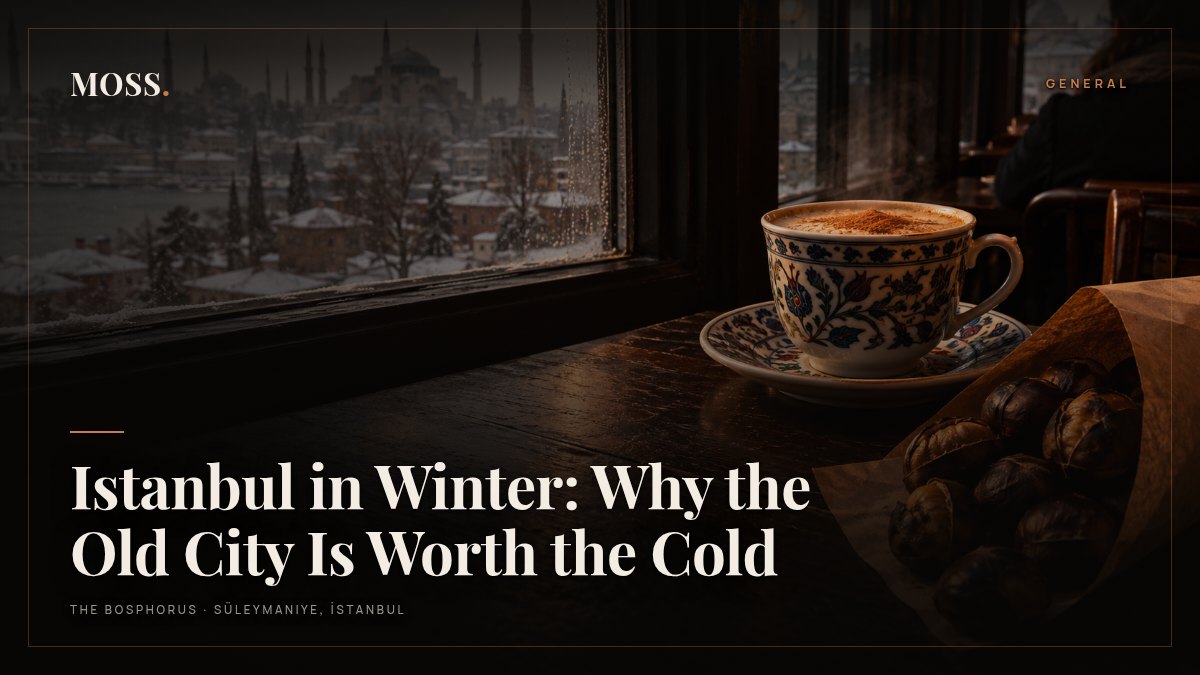
Istanbul in winter, roughly December to February, is cool, damp and often grey, with daytime temperatures usually somewhere between 5 and 10°C, regular rain and the occasional snowfall. It is also the season when the old city is at its quietest. Queues shrink at the great monuments, hotel rates soften, and the food turns to the warming dishes Istanbullus wait for all year. For travellers who pack properly, it is one of the best times to see the historic peninsula.
What is the weather like in Istanbul in winter?
Expect cold, wet, changeable weather rather than a deep freeze. January and February are the coldest months, with nights often close to freezing and days rarely much above ten degrees. Rain comes in spells of several days, and the wind matters more than the thermometer: the poyraz, the north-easterly off the Black Sea, brings a raw chill, while the lodos from the south-west arrives mild, gusty and wet, and churns up the Bosphorus.
The days are short. In December the sun sets before five in the afternoon, which means sunset over the Golden Horn comes early enough to enjoy well before dinner. Between the grey spells come clear, cold days of startling light, when the domes stand sharp against a pale blue sky. Those are the days to be outdoors.
Does it snow in Istanbul?
Sometimes. Most winters bring at least a little snow, usually in January or February, though in the city centre it often melts within a day. Every few years a heavier fall settles for longer, closes schools and turns the whole city briefly hushed.
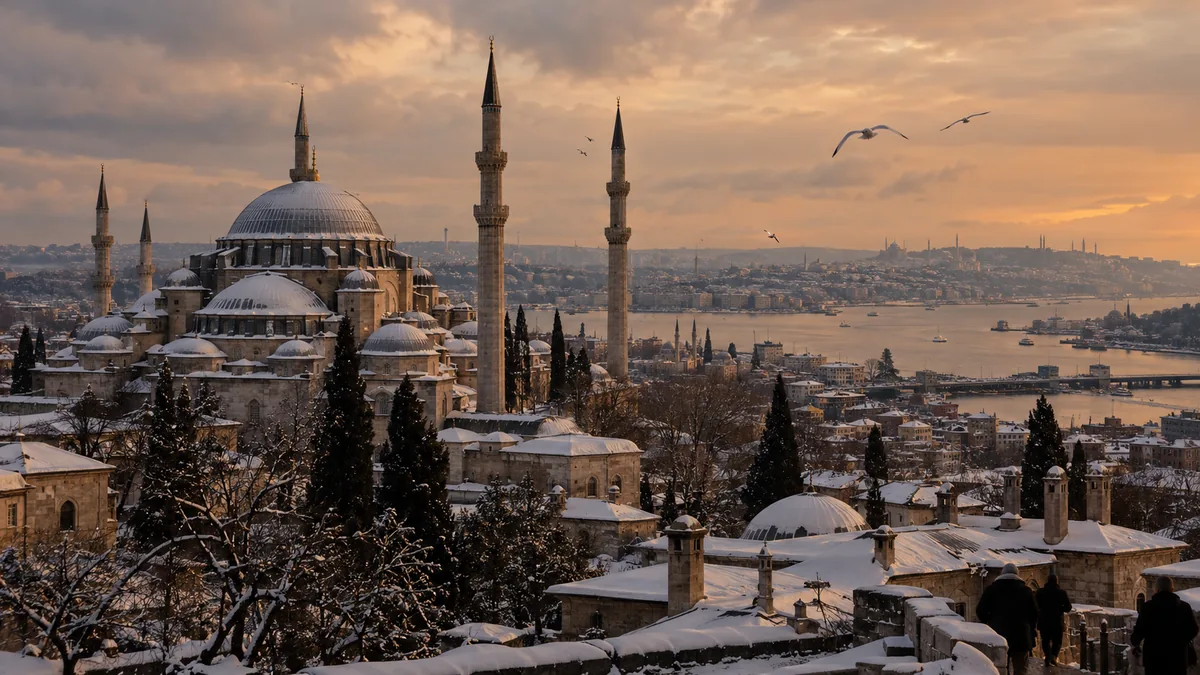
When it does settle, the historic peninsula is at its most beautiful. Snow lines the domes and lead roofs of the Süleymaniye and the Blue Mosque, the courtyards empty, and the gulls over the Golden Horn look whiter than usual against the grey water. If you wake to a snowy morning, go out early, before the footprints. Take care on the hills, though: the cobbles turn slick, and Istanbul is not built for ice.
What should you eat and drink in an Istanbul winter?
Winter has its own menu in Istanbul, and some of it only appears in the cold months:
- Salep: a hot, thick, milky drink made from the ground root of wild orchids and dusted with cinnamon. You will find it on ferries, at street carts and in cafés.
- Boza: a cool, tangy, gently sweet drink of fermented millet, topped with cinnamon and roasted chickpeas. The classic place to drink it is Vefa, just below Süleymaniye, where it has been made since the nineteenth century.
- Hamsi: the Black Sea anchovy, at its best in the cold months, fried in cornmeal or baked with rice. Fish restaurants and the grills near the water serve it by the plateful.
- Kestane: roasted chestnuts, sold hot in paper cones from carts across the city, their smoke drifting over the squares at dusk.
Add plenty of çay (Turkish tea) and a bowl of mercimek çorbası (red lentil soup) at lunch, and you will stay warm. Our guide to Turkish çay explains why the glass never stays empty for long, and if you want something sweet to follow, our guide to Turkish desserts has plenty of ideas.
What should you pack for Istanbul in winter?
Pack for rain and wind rather than polar cold. The essentials are short:
- A waterproof jacket with a hood, warm enough for the wind on a ferry deck. Umbrellas tend to suffer in the lodos.
- Shoes with a good grip. Wet marble and cobblestones are slippery, and the hills are steep.
- Layers, such as a sweater or fleece you can take off in heated museums and restaurants.
- A scarf, which doubles as a head covering for women visiting mosques.
- Gloves and a hat for evenings and crossings on the water.
What can you do indoors in the old city?
Winter is the season for interiors, and the historic peninsula has some of the finest anywhere. Hagia Sophia and the Basilica Cistern are both far less crowded than in summer. Topkapı Palace, the Harem in particular, rewards a slow visit. The Istanbul Archaeology Museums, the Turkish and Islamic Arts Museum on the old Hippodrome, and the covered lanes of the Grand Bazaar will all keep you dry for hours. A traditional hamam (Turkish bath), all warm marble and steam, may be the best answer to a cold afternoon.
For a sense of how winter compares with the rest of the year, our guide to Istanbul through the seasons walks through each one.
A warm winter evening in Süleymaniye
When the sun drops early and the wind comes off the water, the best winter plan is a long evening at a good table. Moss Lounge the Bosphorus sits in Süleymaniye, on Fetva Yokuşu, looking out over the Golden Horn and the Bosphorus with the mosque's silhouette on the other side. Adem Özen runs it as a home rather than a restaurant, the çay is endless, and there is nargile (Turkish water pipe), world cuisine and a signature dessert to round off a cold day. A WhatsApp message is all it takes to reserve.