Turkish Coffee: Ritual, History and How It's Served
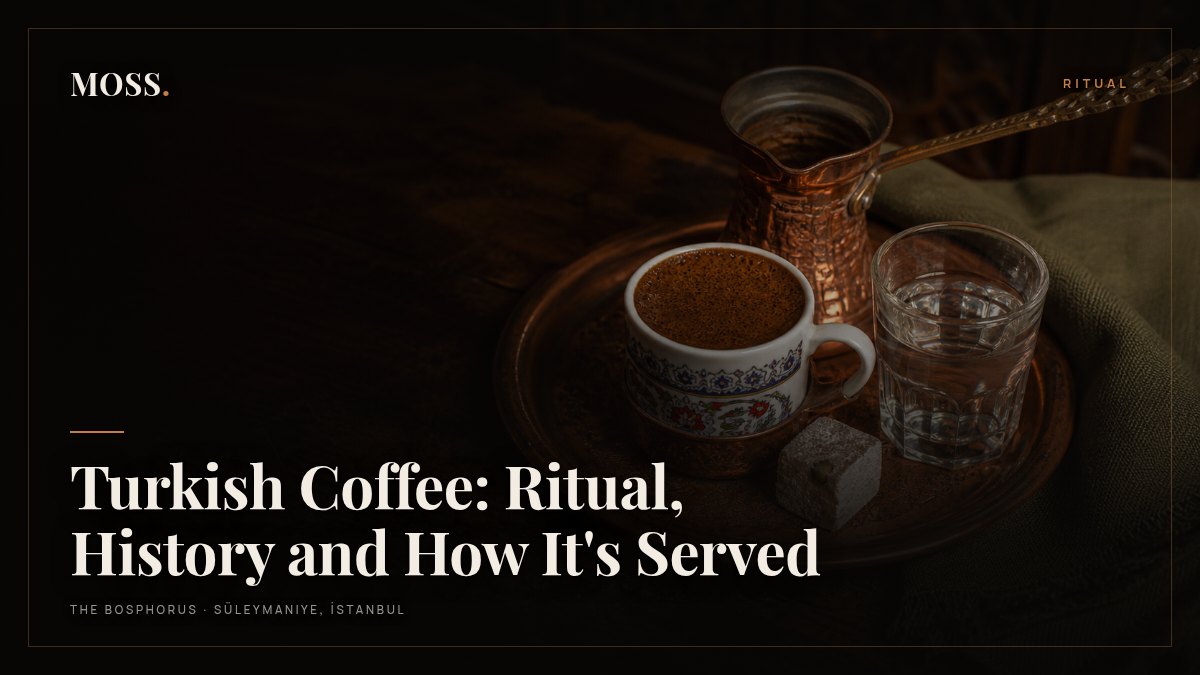
Turkish coffee (in Turkish, “Türk kahvesi”) is coffee ground almost to powder, simmered slowly in a small long-handled pot called a cezve, and served unfiltered so the grounds settle in the cup. People ask what makes it different, and the short answer is the method: nothing is filtered out, a layer of foam is prized on top, and it arrives with a glass of water and something sweet on the side. It is a sipping coffee, strong and small, and in Turkey it is treated as a ritual rather than a quick caffeine fix.
What is Turkish coffee and how is it made?
It begins with beans ground far finer than for any other style, close to flour. The grounds, water and any sugar go into the cezve together and are heated slowly, never rushed to a hard boil. As it warms, a soft foam rises, and a good cup keeps some of that foam on the surface when it is poured.
The coffee is then poured grounds and all into a small cup and left to settle for a moment before you drink. What sets it apart is simple:
- Unfiltered: the grounds stay in the cup and settle at the bottom, so you stop before the last sip.
- Foam on top: the fine layer of crema is a mark of a cup made with care.
- Served with water and a sweet: the water cleans the palate first, and a small sweet, often a piece of Turkish delight, balances the strength.
- Sweetened in the pot: you choose the sugar level before brewing, not after, since you cannot stir the grounds.
That last point matters when you order. You will be asked how sweet you want it, from plain to very sweet, and that choice is made before the coffee ever reaches the heat.
Where does Turkish coffee come from?
Coffee reached Istanbul centuries ago and quickly became woven into the city's social life, served in homes and in the coffeehouses that grew up around it. The method, finely ground and simmered in a cezve, is old and has been carried down with care. It is heritage in a real sense: the tradition and culture of Turkish coffee are recognised by UNESCO as part of the country's intangible heritage.
That history is why the coffee carries more weight than its small cup suggests. It has long been part of hospitality, of asking someone to stay a while, of marking a visit or an occasion. Serving it well is a way of showing care, which is much the same instinct that runs through a Turkish table generally.
How is Turkish coffee different from espresso?
They look related, both small and strong, but they are made on opposite principles. Espresso forces hot water through grounds under pressure and leaves the grounds behind. Turkish coffee simmers the grounds in the water and serves them in the cup. One is filtered and quick, the other is unfiltered and slow.
The experience differs too. An espresso is often a fast stop at a bar. A Turkish coffee is meant to be sipped over conversation, the water beside it and a sweet to hand, with no reason to hurry. It is thicker on the palate, and the settled grounds mean you drink it down to a natural stop rather than draining the cup.
When do you drink Turkish coffee?
After the meal, not during it, and rarely in a rush. Turkish coffee is the close of an occasion, the cup that comes once the plates are cleared and the table has settled into talk. It pairs naturally with something sweet, which is why it sits so comfortably at the end of a long evening.
This is worth knowing at breakfast in particular: a Turkish breakfast runs on tea throughout, and the coffee tends to arrive later, after the meal rather than alongside it. In the evening, it is the gentle full stop, the moment a slow dinner becomes a slow night, and it leads neatly into the wider world of Turkish desserts that share its place at the end of the table.
A Turkish coffee to close the evening at Moss
If you would like to end an evening the proper way, Moss Lounge the Bosphorus in Süleymaniye serves Turkish coffee after dinner on a terrace above the old city and the water, the kind of close a long meal deserves. Adem Özen, the host, treats the place as a home rather than a restaurant, so the last cup is unhurried, ideally over the sunset light, an easy pairing with the slow, view-led evening the terrace is built for. Reservations are by WhatsApp.