Balat and Fener: The Colourful Streets of the Golden Horn
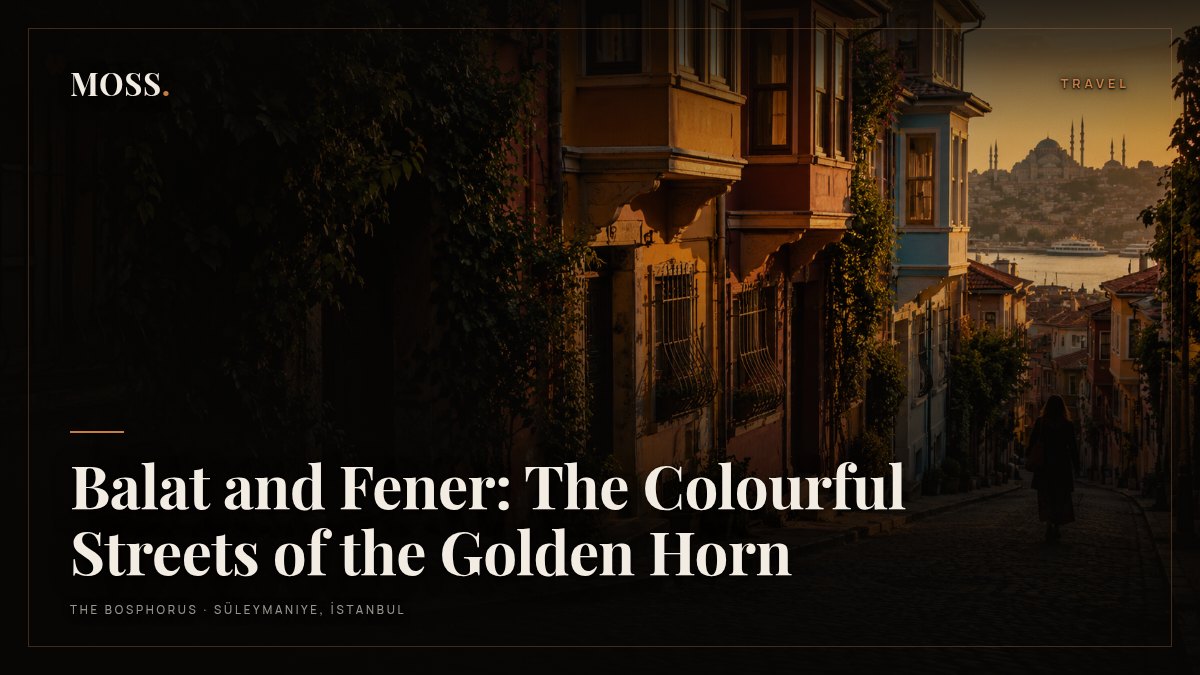
Balat and Fener are two neighbouring quarters on the southern shore of the Golden Horn, in Istanbul's Fatih district, known for steep lanes of colourful houses and a long history as home to the city's Greek, Jewish and Armenian communities. Fener holds the Ecumenical Patriarchate of the Orthodox Church; Balat, just upstream, was for centuries a centre of Jewish life. Together they make one of the most rewarding half-day walks in the old city.
What is the history of Balat and Fener?
Fener, the Phanar of Greek sources, became the heart of Istanbul's Greek Orthodox community after the Ottoman conquest of 1453. Wealthy Greek families, later known as the Phanariots, built mansions here and served the Ottoman state as translators, administrators and governors of the Danubian principalities. Balat, next door, took in Sephardic Jews who arrived after their expulsion from Spain in 1492, and it remained a Jewish neighbourhood into the twentieth century, alongside Armenian and Greek neighbours.
Most of those communities have since dwindled, through the riots of 1955, the expulsions of 1964 and decades of emigration. Many houses passed to newcomers from the Black Sea coast and Anatolia, and the area grew poor and overlooked. In recent years restoration projects and a wave of cafés have brought visitors back, and the quarter now lives with a certain tension between longtime residents and its new popularity.
What are the main sights in Fener and Balat?
Start in Fener, at the Ecumenical Patriarchate and its Church of St George, the seat of the Orthodox patriarchs since the start of the seventeenth century. The church is modest from outside and rich within, with a carved and gilded iconostasis. The main gate of the compound has been kept closed and painted black since 1821, when Patriarch Gregory V was hanged there at the outbreak of the Greek War of Independence.
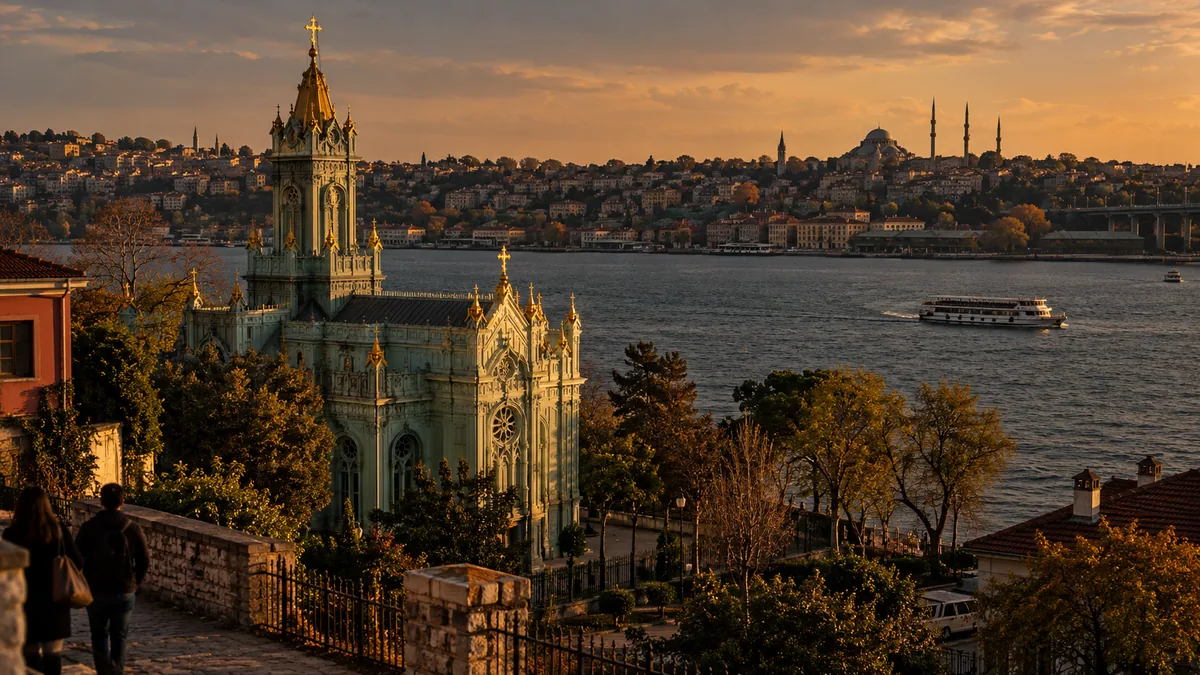
Above it, the red-brick bulk of the Phanar Greek Orthodox College, built in the 1880s and nicknamed the Red Castle, dominates the hill. Down by the water stands the Bulgarian St Stephen Church, the iron church, assembled from prefabricated cast-iron panels made in Vienna, shipped down the Danube and across the Black Sea, and consecrated in 1898. Restored in recent years, its Gothic-revival lines and pale green ironwork look extraordinary against the Golden Horn.
In Balat, the Ahrida Synagogue, among the oldest in the city, traces its origins to the fifteenth century; visits need to be arranged in advance through the Jewish community. The Armenian church of Surp Hreşdagabet stands a few lanes away. And a short climb uphill, beyond the quarter, the former Chora church, now the Kariye Mosque, holds some of the finest Byzantine mosaics anywhere.
Where are the colourful houses and cafés?
The famous facades, painted ochre, raspberry, sky blue and mint, cluster along the steep lanes of Balat: Kiremit Caddesi, the stepped Merdivenli Yokuşu, and the streets around Vodina Caddesi. Many are timber or brick townhouses with a cumba, the projecting bay window that lets residents watch the street. Some are freshly restored; others lean and peel, propped up by their neighbours.
Vodina Caddesi and the lanes off it hold most of the cafés, small antique dealers and bakeries. Quality varies, and at weekends the most photographed corners can feel more like a backdrop than a neighbourhood. Walk a few streets further up and the cafés thin out, washing hangs between windows, and children play football against the walls.
How do you photograph Balat respectfully?
Balat is photogenic, and it is also where people live. Its residents have watched a great many cameras arrive in a short time, and a little care goes a long way:
- Ask before photographing people, and do not photograph children without a parent's clear permission.
- Do not sit on doorsteps or climb on steps and window ledges for a shot.
- Keep your voice down on residential lanes, especially early and late in the day.
- Buy something, a coffee, a simit or a loaf, from the shops on the streets you photograph.
- Inside churches and the synagogue, follow the posted rules and assume flash is unwelcome.
Early morning light is softest on the facades, and the streets are at their quietest. Our photographer's guide to the Bosphorus and the old city has more on timing and light.
How do you get to Balat and Fener from Süleymaniye?
The two quarters lie about three kilometres upstream from Süleymaniye along the Golden Horn. You can walk it in around forty minutes: down from the mosque towards the shore and west along the waterfront park, or through the hill streets of Zeyrek and Fatih if you prefer lanes to traffic. It pairs well with our half-day walk through the historic peninsula.
If your legs need a rest, buses run along the shore road from Eminönü, and the Golden Horn ferry stops at both Fener and Balat, a slow and scenic way to arrive. A taxi from Süleymaniye takes around ten minutes when traffic allows. Our guide to getting around the historic peninsula covers the other options.
Back up the hill for the evening
From Balat, the light over the Golden Horn turns gold in the late afternoon, and it is worth carrying that view with you. Moss Lounge the Bosphorus, back in Süleymaniye on Fetva Yokuşu, has a rooftop terrace that looks out over the same water, with the Süleymaniye Mosque on the other side. Adem Özen, its host, treats guests as he would at home, and a WhatsApp message is all it takes to hold a table for dinner, sushi, or a slow nargile (Turkish water pipe) with çay after the walk.