Istanbul's Fish Seasons: Hamsi, Lüfer and the Bosphorus Catch
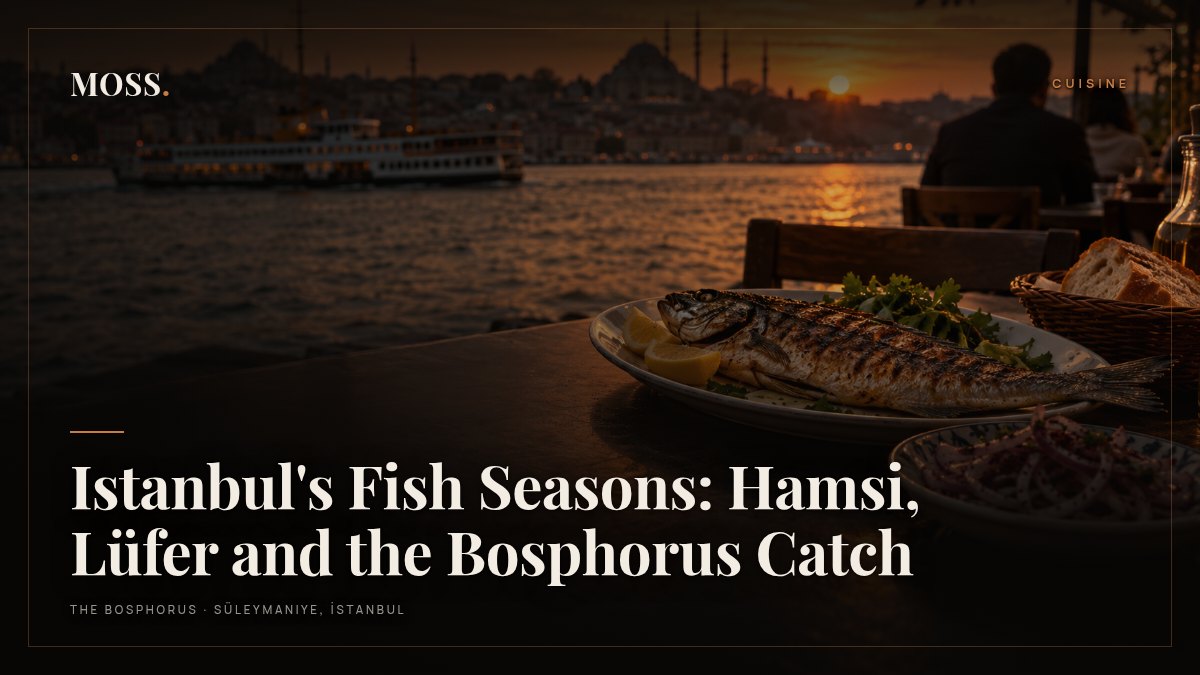
Istanbul eats fish by the calendar. The Istanbul fish seasons follow the migration of shoals through the Bosphorus, the strait between the Black Sea and the Sea of Marmara, so what lands on your plate depends on the month. The short answer is that autumn and winter are the peak. Palamut (Atlantic bonito) and lüfer (bluefish) run in the autumn, and hamsi (Black Sea anchovy) takes over in the heart of winter. Order what is in season and you eat the best the city has.
Why does Istanbul eat fish by season?
The Bosphorus is a narrow channel linking two seas of different temperature and saltiness. Each autumn, as the Black Sea cools, migratory fish move south through the strait toward the warmer Marmara, and many move back in spring. Istanbul sits right on that route, so for centuries its fishermen have known when each fish passes and when it is at its fattest.
The fishing year has a formal rhythm too. Commercial fishing with large nets pauses through spring and summer for spawning, and on the first of September the boats go out again. Fishermen send them off with the old cry “Vira Bismillah”, and the opening is followed across the city. It is one reason autumn in Istanbul is the favourite season of anyone who loves to eat, and why many Istanbullus would rather skip fish in high summer than eat something out of season.
Palamut, lüfer and hamsi: the autumn and winter catch
Each of the three great seasonal fish has its moment and its own way to the table.
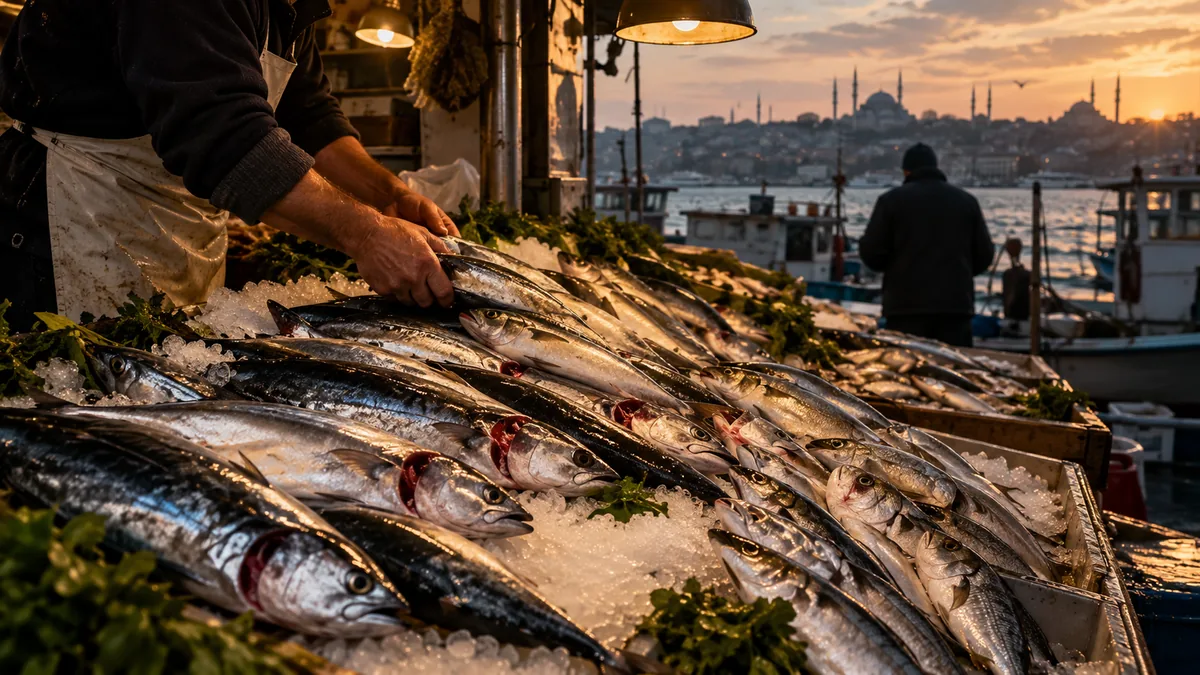
- Palamut (Atlantic bonito) arrives in early autumn. It has firm, dark, oily flesh and is plentiful at the peak. It is grilled in thick steaks, baked in the oven, or cured as lakerda, salted slices served as a meze with red onion and olive oil.
- Lüfer (bluefish) is the prize of the autumn, the fish Istanbullus speak about with real affection. Its meat is rich and fine-grained, and the best way to eat it is plainly grilled over charcoal with salt and lemon. Good fishmongers and restaurants respect the legal minimum size, so ask, and pass on fish that look too small.
- Hamsi (Black Sea anchovy) is the winter fish, at its best from around November to February. It is dredged in cornmeal and fried crisp as hamsi tava, baked into hamsili pilav (rice wrapped in a jacket of anchovies), or worked into breads in the Black Sea towns it comes from.
Alongside these, istavrit (horse mackerel) is a steady, inexpensive presence for much of the year, small and good fried, and kalkan (turbot) is the Black Sea luxury of winter.
How the Bosphorus migration shapes the table
Because the fish pass so close to the city, the catch can be very fresh: landed at dawn, on the market slab by morning, on a grill by evening. A fish also changes name as it grows, and the names tell you what you are looking at. Small lüfer is çinekop, a large one is kofana, and a big palamut becomes torik. Hear those words at a stall and you know the size before you see the fish.
Weather plays its part. A strong northerly wind, the poyraz, can push the shoals south and bring a good week of fishing, while a warm autumn can delay everything. Istanbullus follow the catch the way other cities follow football results, and a good lüfer year is something people talk about over tea.
Where to see the catch: Istanbul's fish markets
To understand the season, visit a market in the morning. The fish stalls at Karaköy, by the Galata Bridge, sell from the morning's boats, and the market streets of Kadıköy on the Asian side make a fine morning walk with plenty of fishmongers. On the historic peninsula, Kumkapı is the old fish-restaurant quarter, where meze tables spill into the lanes in the evening. For a wider picture of eating around the old city, see our foodie's map of the historic peninsula.
Look for clear, bright eyes, red gills, firm flesh and a clean smell of the sea. The best stalls display the fish whole and will clean it for you if you ask.
How to order fish in an Istanbul restaurant
Ordering fish here works a little differently from many cities. Instead of choosing from a fixed list, you often look over the day's fish in a display, pick one, and it is priced by weight. A few tips help:
- Ask what is in season today and trust the answer. The seasonal fish is usually the best and the best value.
- Match the cooking to the fish: the grill for lüfer and palamut, the frying pan for hamsi and istavrit.
- Start slowly with cold plates. A fish dinner in Istanbul opens with meze, as our guide to the art of mezze explains.
- Confirm the weight and price before it goes on the grill. It is normal practice and no one minds.
- Use your fingers for small fish. Hamsi especially is pulled off the bone by hand.
Rakı, the anise spirit mixed with water and ice, is the traditional companion to a fish dinner, though a glass of tea at the end is just as much part of the ritual.
Seafood with a view in Süleymaniye
Istanbul's fish culture is tied to the water, and the water is the view from the terrace at Moss Lounge the Bosphorus. From Süleymaniye you look over the Golden Horn and the Bosphorus, with ferries crossing the same strait the shoals travel each autumn. The kitchen covers world cuisine from the Mediterranean to the Far East, sushi and sashimi included, and Adem Özen, the host, runs the place as a home rather than a restaurant. Send a WhatsApp message to book a table, any day from 08:00 to 02:00.