The Art of Mezze: Turkey's Shared-Plate Tradition
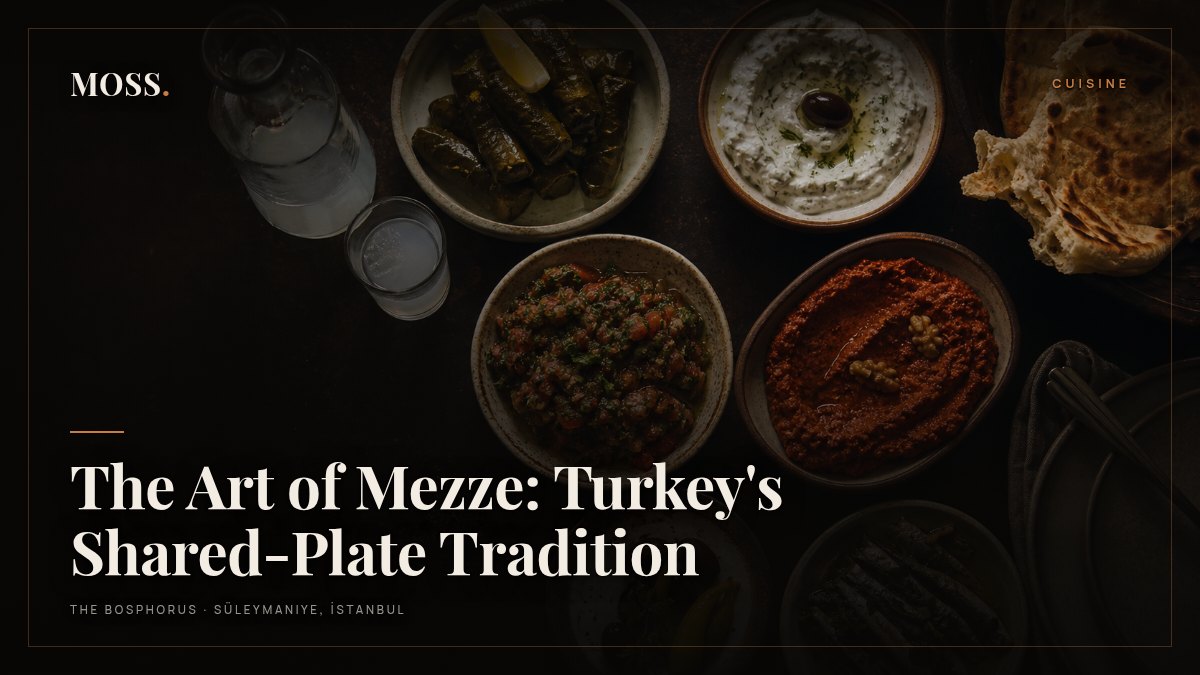
Mezze (in Turkish, “meze”) is the tradition of eating many small dishes at once, cold and hot, set out across the table to be shared rather than ordered as single plates. People ask what mezze is, and the honest answer is that it is less a course and more a way of eating: a slow, social spread of little bowls that you graze across over conversation. In Turkey a meze table is how an evening begins and often how it lingers, the plates kept coming while no one is in any hurry to finish.
What exactly is a meze?
A meze is a small dish, usually one element done well, meant to be eaten alongside many others. The table is built from variety rather than size. You take a little of this, a little of that, return to a favourite, and let the selection carry the meal instead of a single main.
Meze splits broadly into two kinds:
- Cold meze (soğuk meze): the openers, often yoghurt-based, vegetable, or olive-oil dishes, served chilled or at room temperature.
- Hot meze (sıcak meze): things that arrive warm from the kitchen, frequently fried or grilled, brought a little later in the evening.
Together they form a rhythm. Cold dishes set the table while everyone arrives and settles, and hot dishes keep the evening moving once it has found its pace.
What are the classic Turkish meze?
The cast is wide and shifts by region and season, but a handful of names appear again and again. If you are new to a meze table, these are good anchors to look for:
- Haydari: a thick strained-yoghurt dip with garlic and herbs, cool and rich.
- Ezme: a finely chopped salad of tomato, pepper, onion and herbs, usually with a little heat.
- Dolma: vegetables or vine leaves stuffed, often with rice, herbs and olive oil, served cold.
- Sigara böreği: thin pastry rolled around cheese and fried until crisp, a hot-meze favourite that disappears fast.
Beyond these, expect olive-oil vegetable dishes, fresh and pickled bites, and bread to carry it all. The pleasure is in the contrast across the table, sharp against creamy, cool against warm, rather than in any one plate.
How does a meze table actually work?
It works by sharing, and by patience. The plates land in the middle, everyone reaches in, and the meal moves at the speed of the conversation. There is no set order to defend and no single dish to wait for, which is exactly what makes a meze table relax a group so quickly.
A few habits help you settle into it:
- Order generously across cold and hot, and let the hot dishes arrive in their own time rather than all at once.
- Use bread as the tool, scooping and building small bites rather than plating a portion of your own.
- Pace yourself. A meze table looks like a feast on arrival, but the point is to graze over a long stretch, not to clear it.
- Let it run alongside drinks and slow talk. The food is the setting for the evening as much as the meal.
This shared-plate rhythm is close kin to the way a Turkish breakfast works in the morning: many small things, no rush, the table as the centre of attention.
Why does mezze suit a long evening with a view?
Because it is built for time, not speed. A meze table gives a group a reason to stay, to keep ordering, to let the light change while they talk. Pair that with a setting worth sitting in and the meal becomes the whole evening rather than a stop within it.
This is the heart of the long-table philosophy, where the table is the centre and the view is the setting around it. A meze spread, by its nature, refuses to be rushed, which makes it the natural opening to a slow night and an easy bridge into the wider world-cuisine table Istanbul now lays out.
A meze table on the Süleymaniye terrace
If you would like to start an evening this way, Moss Lounge the Bosphorus in Süleymaniye sets a long table on a terrace above the old city and the water, the kind of place a meze spread was made for. Adem Özen, the host, keeps the rhythm unhurried, treating the room as a home rather than a restaurant, so the plates and the conversation are allowed to run. Reserve by WhatsApp, arrive hungry, and let the table fill slowly as the light goes down.