Eating Vegetarian in Istanbul: A Surprisingly Rich Table
Eating vegetarian in Istanbul is far easier than most visitors expect. The short answer for anyone worried about it: Turkish food has a deep, naturally meat-free tradition, and a vegetarian can eat richly here without hunting for a specialist menu. Whole families of dishes, the olive-oil vegetable plates known as zeytinyağlı, the small-plate world of meze, and the long breakfast itself, are built around vegetables, grains, cheese and pulses. You do not have to ask for a substitution. You just have to know what to order.
Is it easy to eat vegetarian in Istanbul?
Yes, more than the kebab reputation suggests. Turkish cuisine has always treated vegetables as food in their own right, not a side to meat, which means a great deal of the everyday table is meat-free by default. The olive-oil dishes, the meze spreads, the breakfast, the breads and pastries, the soups, much of this was vegetarian long before anyone called it that.
The one habit worth keeping is to ask. Some dishes that look plant-based are cooked with meat stock, and a stuffed vegetable might hold a rice-and-herb filling or a minced-meat one. A simple question settles it, and Turkish hospitality makes the asking easy. Beyond that small care, the city is generous ground for a meat-free traveller.
What are zeytinyağlı, the olive-oil dishes?
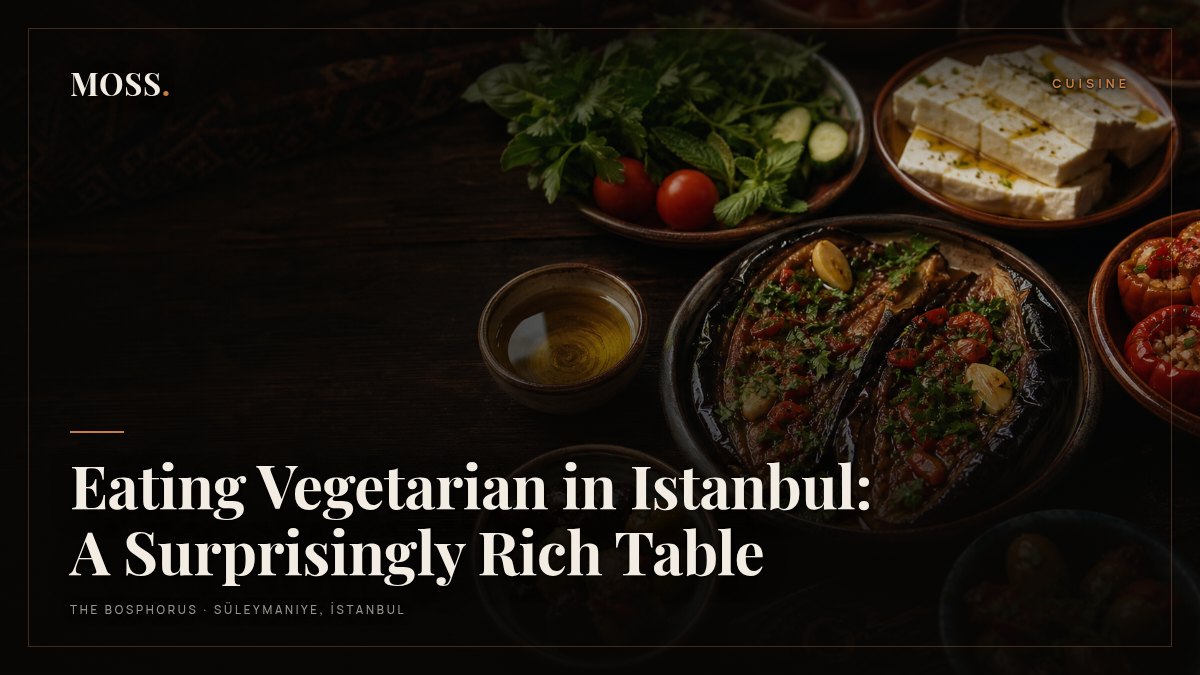
The heart of the vegetarian table is zeytinyağlı (literally “with olive oil”): vegetables slow-cooked in plenty of olive oil and served cool or at room temperature, a whole genre of Turkish cooking that happens to be entirely plant-based. These are not afterthoughts but some of the most refined dishes in the cuisine. The ones to look for:
- Zeytinyağlı fasulye: green beans braised slowly with tomato, onion and olive oil, served cold.
- Dolma and sarma: peppers, tomatoes or vine leaves stuffed with a fragrant rice, pine nuts, currants and herbs (ask, as some are made with meat).
- İmam bayıldı: a whole aubergine stewed soft with onion, garlic and tomato in olive oil, one of the great dishes of the repertoire.
- Zeytinyağlı enginar: artichoke hearts cooked gently with peas, carrot and dill.
Eaten cool, with bread, these dishes are light and deeply flavoured, and several together make a satisfying meal on their own.
What about meze and breakfast?
Two of Istanbul's best eating traditions are a vegetarian's natural home. Meze, the spread of small shared plates, is full of meat-free options: haydari (strained yoghurt with garlic and herbs), ezme (a spiced tomato and pepper relish), hummus, smoky roasted aubergine, marinated vegetables, white cheese, and more. A meze table assembled from these is a complete, generous meal, and our guide to the art of mezze walks through how the shared-plate rhythm works.
The Turkish breakfast is the other gift. A traditional spread is almost entirely vegetarian by nature, cheeses, olives, tomato and cucumber, eggs, honey, jam, bread and endless tea, with only a sausage or two to set aside. It may be the easiest celebratory meal a vegetarian traveller will find anywhere, and our guide to the traditional Turkish breakfast covers the full table. For dinner, the wider world cuisine of an Istanbul kitchen only widens the meat-free choice further.
How do you build a vegetarian day in Istanbul?
Plan it around the meals the city does best, and you will eat well without effort. A long Turkish breakfast covers the morning richly. A meze table, drawn from the cold and hot plates, makes a fine lunch or the opening of a dinner. The zeytinyağlı dishes anchor the main meal, and the bakeries, with their cheese and spinach börek (layered pastry), cover anything in between. Add the fruit, the breads, the soups and the sweets, and a meat-free day in Istanbul rarely feels like a compromise.
A meat-free table in Süleymaniye
If you would like a generous vegetarian table with a view, Moss Lounge the Bosphorus sits in Süleymaniye, on the historic peninsula, with a terrace between the Süleymaniye Mosque silhouette and the Bosphorus. Adem Özen, who opened it in 2019, runs the place as a home rather than a restaurant, laying out a full Turkish breakfast and a kitchen that travels from the Mediterranean to the Far East, with endless çay (Turkish tea) alongside. It is a calm corner to eat well, meat or no meat, while the morning light moves across the water.